Experimental 1-DOF quadruped robot exploring gait generation, locomotion stability, and minimal-actuation walking systems.
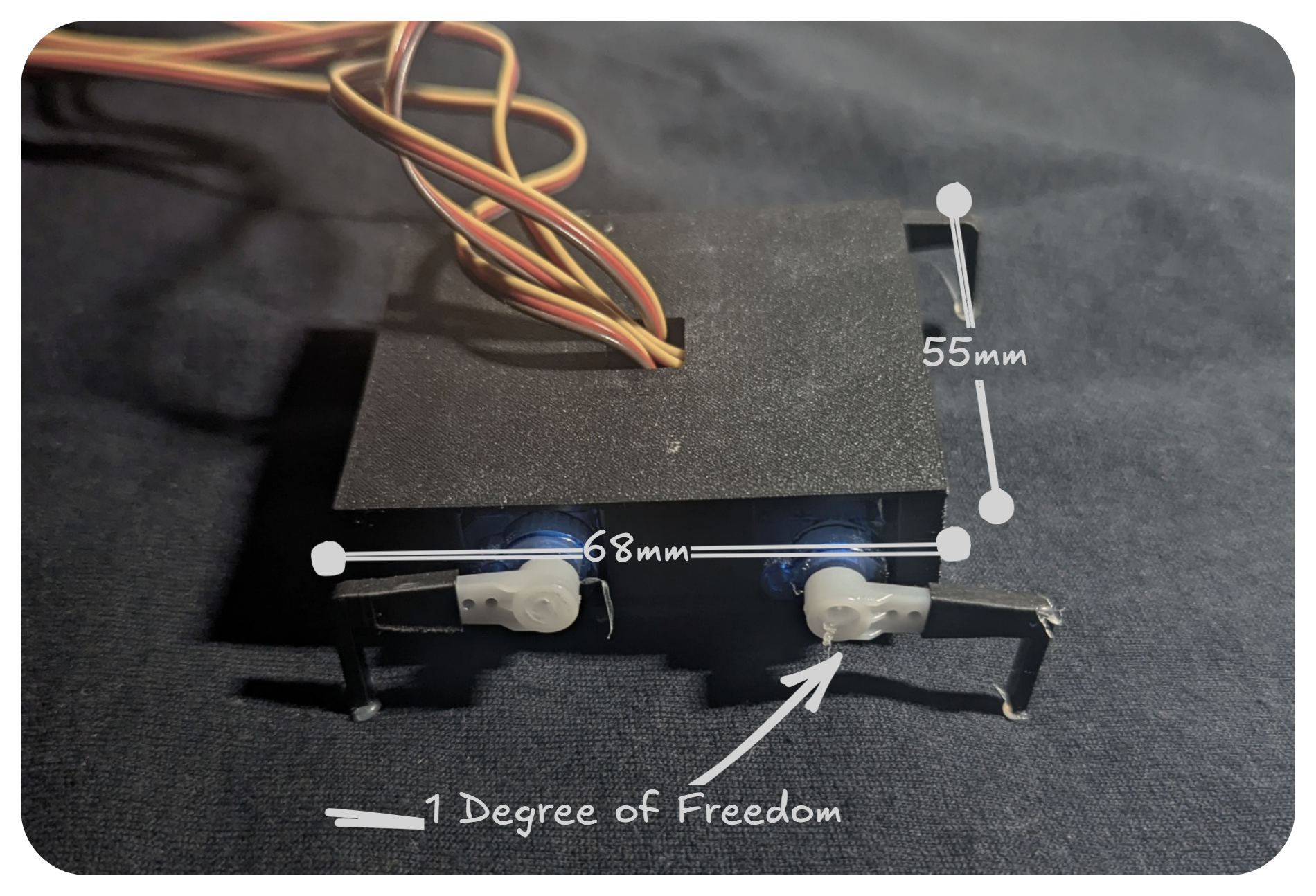
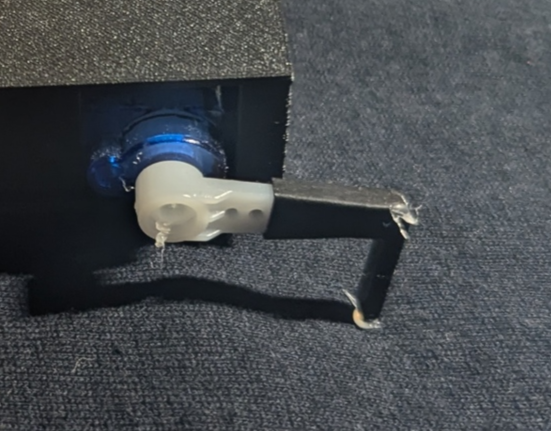
SinglAXS was built to investigate how much walking functionality could be achieved with an intentionally constrained mechanical design. Rather than relying on complex inverse kinematics and multi-axis legs, the platform uses a single rotational axis per leg with direct-drive SG90 servos which forces the gait logic to do the heavy lifting.
Summer 2025
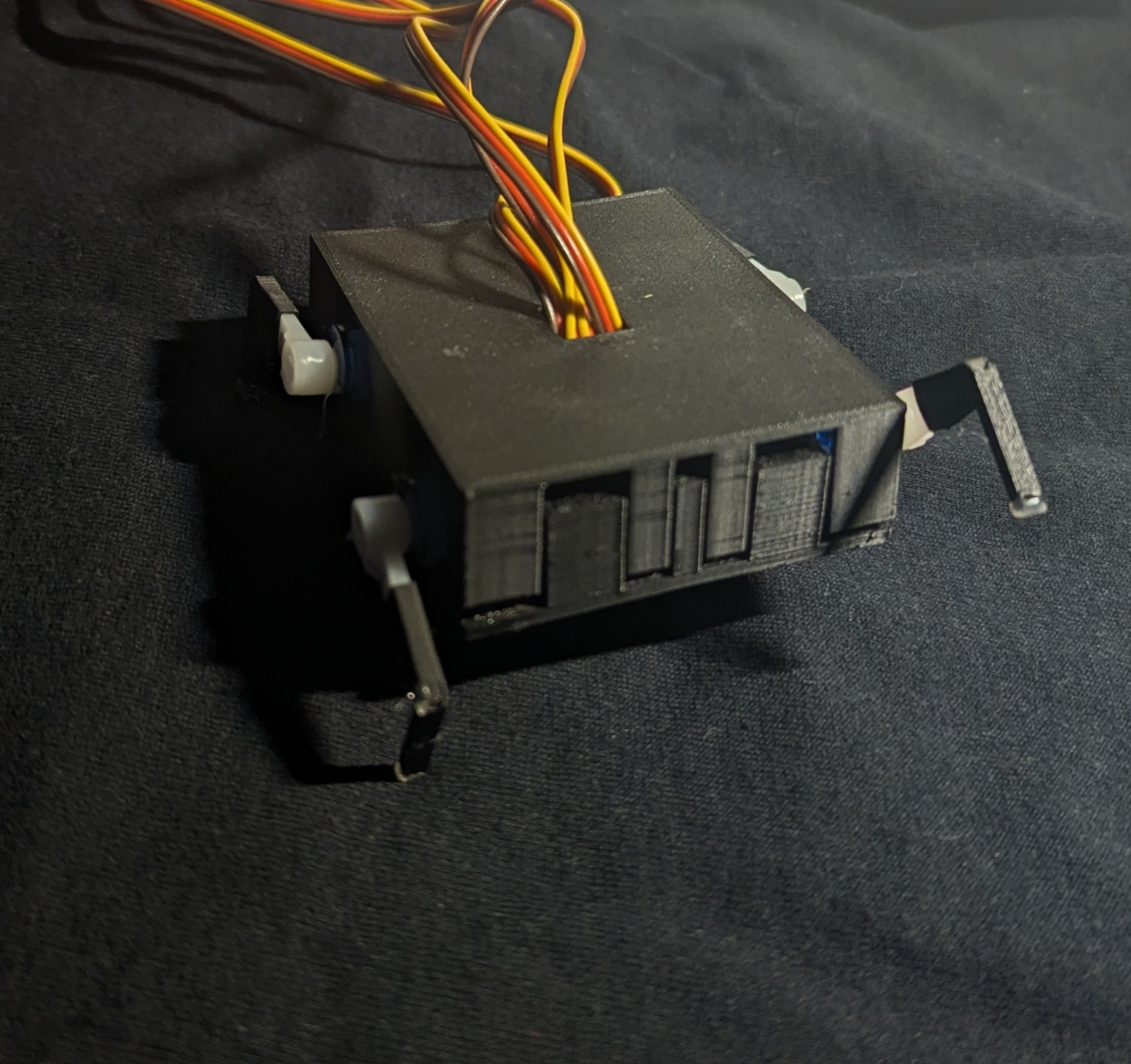
Traditional quadruped robots commonly use multiple degrees of freedom per leg alongside advanced motion planning systems. SinglAXS intentionally reduced this complexity to explore whether stable walking behavior could emerge from a highly constrained platform and what that constraint reveals about gait design.
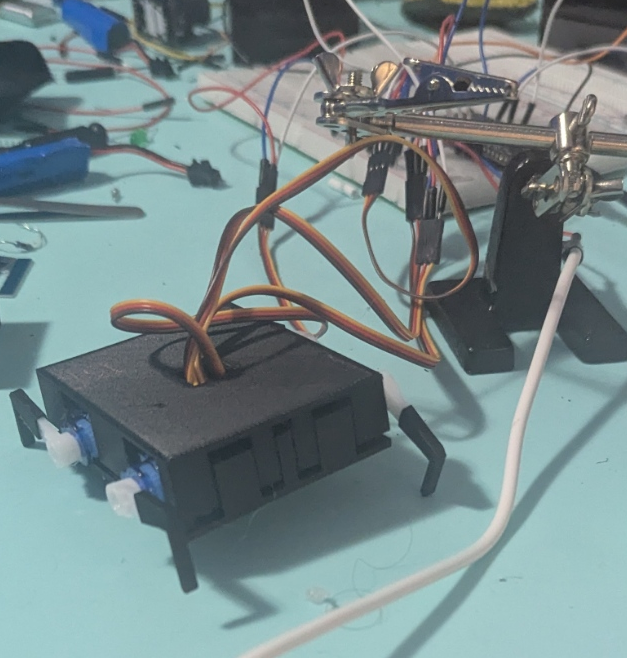
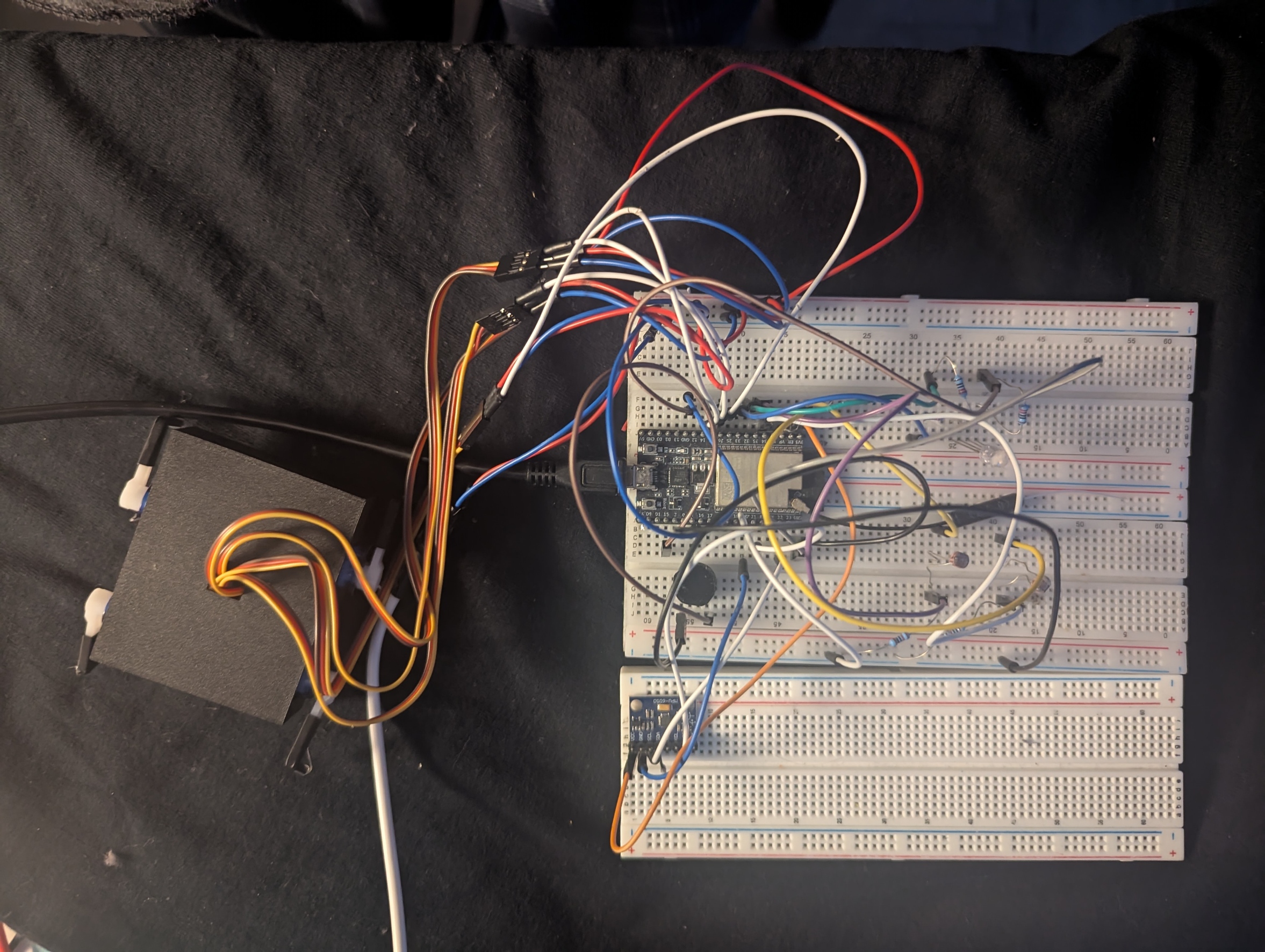
The robot uses four SG90 servos, a lightweight 3D printed frame, and an ESP32-WROVER microcontroller running FreeRTOS-based gait logic. The project focused primarily on gait experimentation, timing synchronization, and mechanical iteration rather than producing a polished commercial-style product. Every design choice was made in service of learning.
Each leg uses only a single rotational axis to simplify control logic and reduce mechanical complexity. This is the key constraint driving all other decisions.
The frame was optimized around lightweight 3D printed parts and direct-drive SG90 servos to allow fast physical redesign between experiments.
The project prioritized testing timing relationships, phase offsets, and locomotion stability over building toward any specific end application.
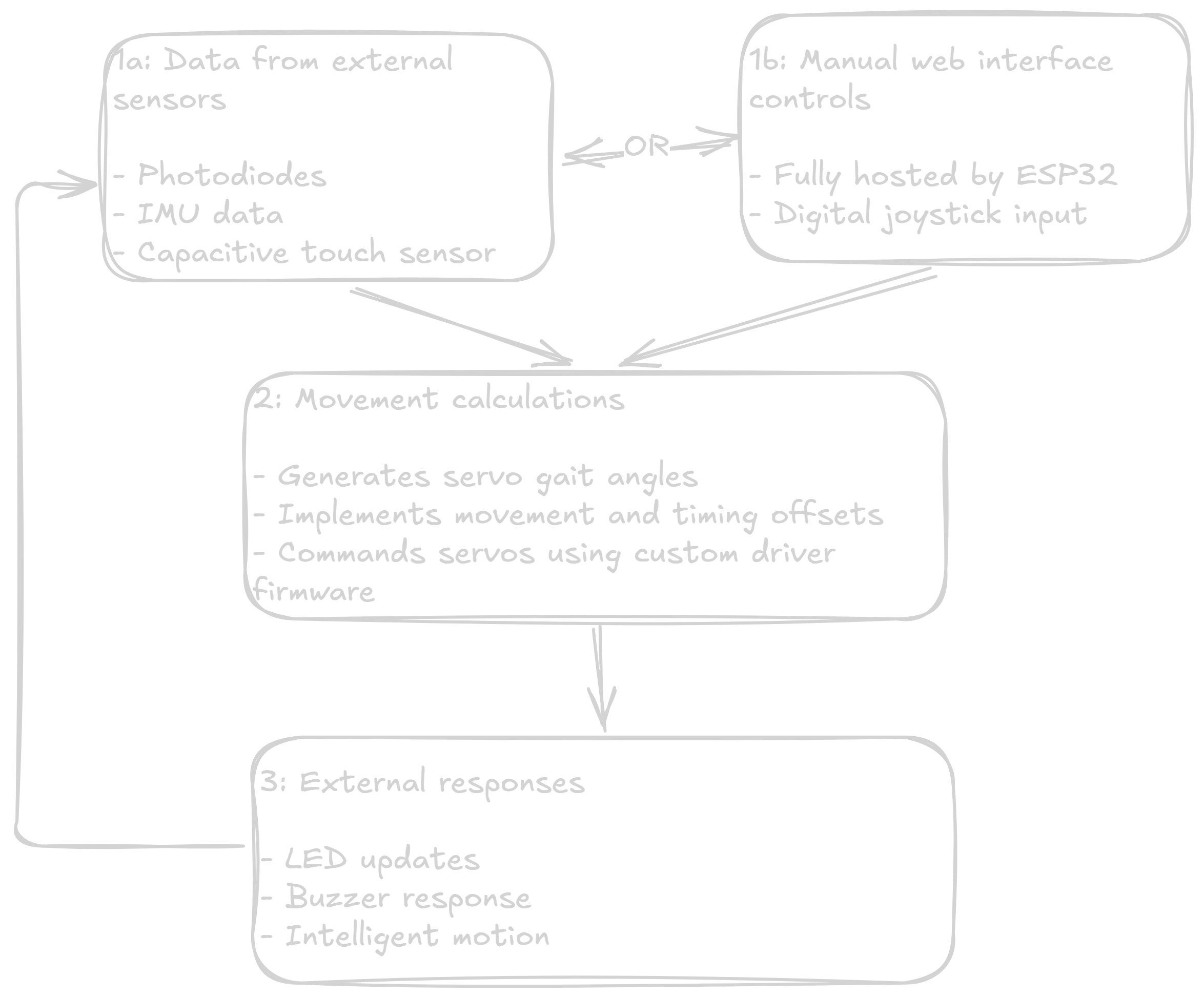
Motion sequencing and gait timing are implemented using FreeRTOS from various movement inputs. Different gait patterns are tested by modifying timing offsets, servo synchronization parameters, and stepping sequences in firmware without modifying the mechanical platform.
The architecture prioritized modular gait testing and rapid iteration while also including specialized autonomy features.
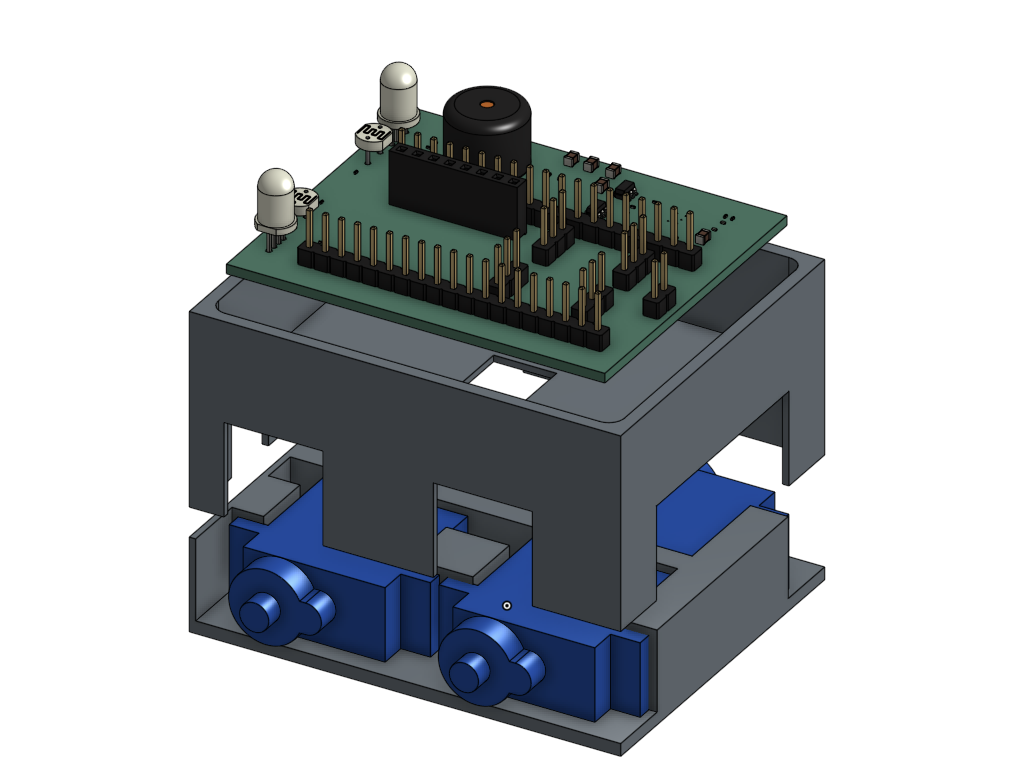
The mechanical structure was designed around the limitations of SG90 servos and single-axis leg movement. Emphasis was placed on keeping the frame lightweight while maintaining enough rigidity for repeatable gait experiments.
Several iterations explored changes to body geometry, leg spacing, and mass placement to improve walking stability. Each revision informed the next, building an understanding of how mechanical parameters interact with gait timing.
Crawl-style gait patterns prioritized stability and continuous ground contact. These tests were useful for evaluating balance and servo synchronization under slower, more controllable movement conditions. Provided a stable baseline before attempting faster gaits.
Faster trot-inspired stepping sequences improved forward speed but introduced stability challenges due to the platform's limited mechanical degrees of freedom. The trot experiments highlighted the tension between speed and stability that defines single-axis locomotion.
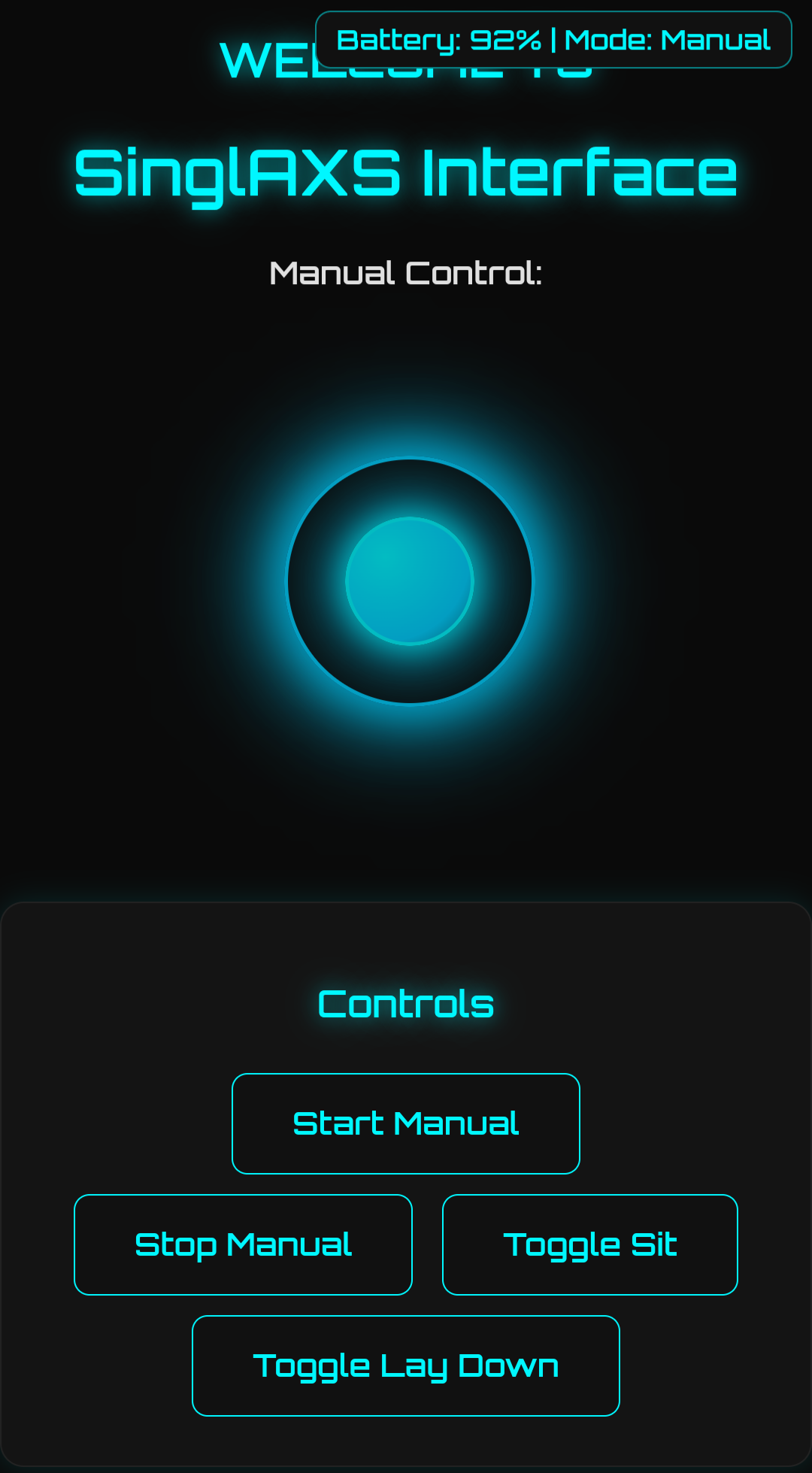
A lightweight browser-based interface was developed to assist with testing and system interaction during development. The interface allowed manual control of the robot and real-time gait parameter adjustment without requiring a firmware flash for every change.
This dramatically sped up the iteration cycle during gait tuning experiments, and served as a useful debugging tool for isolating servo-timing issues.
One of the primary technical challenges was servo jitter and timing inconsistencies during synchronized movement. Multiple firmware revisions explored different update strategies and gait timing approaches before reaching acceptable stability.
Iterative leg geometry modifications analyzed the optimal configuration for stability, ground traction, and weight distribution across the chassis.
| Metric | Result |
|---|---|
| Total Weight | < 120 g |
| Walking Speed | 3–5 cm/s |
| Control System | ESP32-WROVER + FreeRTOS |
| Gaits Tested | Crawl and Trot variations |
| Degrees of Freedom / Leg | 1 (single-axis rotation) |